Autism and the power of the tongue!

Recently, I’ve had conversations with my kids about what it’s appropriate and not appropriate to say to different people. I’ve always been very careful with how I’ve spoken to them but I know that in the past I’ve said things I wish I could retract! Now as I watch my kids grow up I want to spare them the pain of making similar mistakes and having similar regrets.

I want my kids to be able to express how they feel to me and other close family but to have a filter that they use with other people. Not everyone needs to know everything you’re thinking and feeling. Not everyone needs to know what you think about them! Even if you think it will be helpful!

I’ve had to explain that not everyone wants to hear the truth about everything. But how do you explain what’s ok to say and what isn’t?

The best way we’ve found is for us to model it for them. We have a very large dinner table and we sit at it every day for our meals and it’s rare for it just to be the six of us eating together. This gives us an opportunity to model communication.

This in some ways is a high risk strategy because it means there have been some big blunders! But it also means that our kids get to see how we handle those blunders. How we apologise if necessary and we can chat later about where they went wrong. Usually though we all end up laughing and don’t take ourselves too seriously.

We have tried a couple of techniques to get everyone around the table involved in the conversation and help with turn taking. The first one we did for a few years was to let everyone share their happiest moment of the day and their hardest moment. This meant everyone got to speak and we all got to hear about each others day without interrupting and then at the end we could offer some encouragement for getting through whatever the challenge was. We could also talk about what they could do differently the next day.

More recently, we’ve made it a family tradition on birthdays or special occassions to put the person for whom the day is special, in the spotlight and everyone else says what they especially love about that person. We’ve found this so helpful especially with our teenagers, as they often only hear what’s wrong with them from the world around them. This has lead to some really special moments of recognition and confidence boosts.

Whether you’re neurodiverse or neurotypical, we all have to learn to control our tongues! So the best advice I’ve heard is to remember you have two ears and one mouth, use them in that proportion!
Helping Children with Anxiety

A recurring theme in our home is anxiety, and it’s clear that anxiety is a common challenge faced by many families. It can impact our daily lives and the whole family’s overall well-being. As parents, we have to learn how to support and guide our children.

Here’s a few of the things we’ve learnt and are still learning with our children.

  • We need to create a safe and supportive environment. It’s important that we have open communication, this means our children can share their worries and fears. We encourage them to share their thoughts and try not to speak too quickly. We ask lots of non-judgemental questions and reflect back what they have told us. We want them to know they’re heard and taken seriously.
  • We’ve realised that we needed to educate ourselves about anxiety. Don’t assume you understand, as I’ve said before there are lots of helpful YouTube videos about it. Don’t just watch the clinicians but listen to the people who have struggled with anxiety, even if it feels like they don’t have any solutions. It will help you to know what your child could be going through and not able to express.
  • Learn some relaxation and grounding techniques. We’ve found helping our child to focus on something specific. E.g. Name five Marvel superheroes. What’s one thing you can hear, smell, see, touch and taste? Describe your funniest moment in my little pony/ninjago/how to train your dragon etc. All these are good ways to calm down their breathing if they’re having a panic attack or at bedtime if they’re worrying. It also means we can get regulated before we discuss what is causing the anxiety. A relaxation technique we use at bedtime is when they’re lying in bed, to imagine themselves saying goodnight to each part of their body, starting at their toes and working their way up. Both of these have been a good way to stop anxiety at bedtime about the next day.
  • Equipping our children with coping strategies when they’re away from home is important and a big part of that is an active lifestyle. Exercise is so important, it helps to release endorphins or if not exercise, then finding a hobby they get joy from (the trampoline was great for this). Through these things, they’ll also learn some problem-solving skills.
  • Encouraging positive self-talk is really important. We can do this by modelling it for them. But also when our children are in a heightened state, we speak positively to them and don’t let them say they can’t do anything or they will always be this way.
  • We’ve worked at creating predictable routines. As I’ve mentioned before, food is a big deal in our house and so we have a chalkboard with the meal plan written on. Before the weekends, we lay out the plan for the days. Even if the plan is to stay home and relax. If there’s going to be any change, we make sure we give enough notice and if we can’t, we factor in some time to be upset before we need to get out of the house. We’ve found that predictability helps reduce uncertainty, a common trigger for anxiety.
  • This one can be a challenge, but promoting a healthy lifestyle really supports our children’s overall well-being. This means a good amount of sleep, healthy meals, regular exercise and a good self-care routine. Sometimes this means ensuring food isn’t being hoarded in bedrooms and trying to get some fruits and veggies in their diet!
  • Lastly, if you’re still finding your child/children are struggling then seek professional support. There’s no shame in saying you need help and it could make a real difference.

Our experience has been anxiety can be intense for a season and then pass. So we try to make sure we’re preparing them outside of these difficult seasons. This way when anxiety hits the tools are already in place and familiar.

Starbucks Season

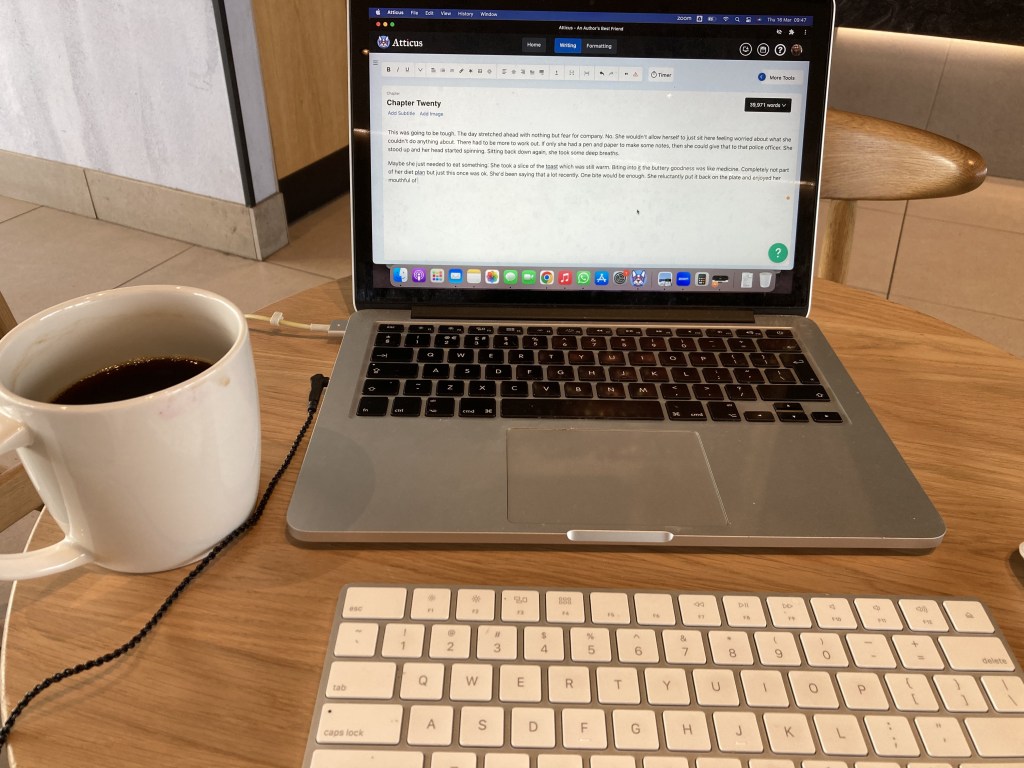
For the last year or so, my writing and publishing partner, Sophie and I, have been meeting in Starbucks on a Thursday to write and talk about publishing, family, and life in general! It’s been so good to have a rhythm to writing and to have a quiet place (earphones in!) to concentrate and when distracted, people watch!

In the time we’ve been meeting, we’ve managed to get a book published and have been individually completing our own novels. This week is one of the last Thursdays I’ll be able to do this. I’m sure there will be other days and other opportunities, change brings with it both positives and negatives.

It’s given me an opportunity to think about seasons of change and transition and how we all cope with them in different ways. This is probably more relevant for me with one child about to finish his GCSE’s and another struggling with a change of teacher. When we get to the end of a season, we sometimes get time to realise it’s coming to an end, as with my son. He’s very ready for it to end. He can’t wait to leave school. Even though he’s going to continue his education, he’s going to be in a different setting with different teachers and less of the subjects he doesn’t want to do!

I want to tell him to enjoy these last few months of school. He’ll never get this time back and so I want him to embrace the school experience, to enjoy being with his friends every day. To choose not to let the stress of exams wear him down but to realise this is one step towards the future he can’t yet see.

But maybe change comes suddenly, as with my daughter, whose teacher has gone off sick. There was no warning and so the change has been jarring. She couldn’t prepare for it and so is struggling to cope with the variation and regular teacher change. This is partly due to her autism, but I think we all find sudden changes hard to cope with. I wish I could help her to understand that change can be good, even when it’s sudden. I want to calm her racing mind and show her the school is doing so much to help her cope, including adding a well-being day to help her find things that she enjoys and is good at.

So as my Starbucks season comes to an end, I’ve been thinking about what I’ve enjoyed about this season, apart from the coffee! It’s been a time of creativity and, let’s be honest, sometimes stress, as we published our first book for Cadence Publishing. I’ve been able to edit and write, people watch and chat. It’s been time to allow my introvert side to get some breathing space. (Our house is very often full of people!)

As I enter a new season, I’m thankful for Starbucks and all that it’s represented on Thursdays for me. I want to remember how important creativity and space to think can be, and in the busy-ness that’s to come, I want to find new ways to get creative. Maybe Starbucks will still feature, somehow! Either way, I’ve a lot to be grateful for.

To get a diagnosis or not?

I know that this can be a sensitive subject but I wanted to open up a discussion around diagnosis. Last year, I wrote about our journey to get a diagnosis of autism for our daughter. Having spent a lot of time researching and learning about autism, I’ve become more alert to it in others. Both in children and adults. What I’ve noticed is that there can be a lot of fear around getting a diagnosis. It centres around a fear of being labelled or having a child labelled for life.

With our daughter, we chose not to talk to her about her full diagnosis until recently, not because we wanted to hide it but because she has other learning difficulties and so she had enough to cope with. But now that she does know, it doesn’t define her. She knows she’s loved and accepted in our family and with her friends. The diagnosis has helped her to understand why she finds certain things difficult, and why when I say she probably needs to get some space, it’s not me wanting to exclude her but trying to help her regulate her emotions. The diagnosis isn’t a negative thing but a positive one that helps her navigate a world that she doesn’t always understand and doesn’t always understand her.

Often for adults I know who receive a diagnosis or even choose to recognise autism in themselves, they find they have a ‘lightbulb moment’. They suddenly understand why they struggled at school or why they do things the way they do. It doesn’t necessarily change their lives, but it gives them a new level of self-awareness. It can also give language to their challenges and solutions to help overcome them.

Another thing I hear is, ‘We’re all somewhere on the spectrum, so what’s the point?’. I understand what they mean, but no, we’re not all somewhere on the spectrum and it’s kind of insulting to reduce the struggles of someone with autism to the same as everyone else has. What people mean when they say everyone is somewhere on the spectrum is that some people have sensory challenges or don’t like change. Neither of those things alone adds up to autism.

So what’s the answer? It starts with a consideration of the language we use around autism. One of the helpful and small changes is to stop thinking of autism as an entirely negative thing. Autism can be called ‘Neuro-diversity’, a different way of thinking. So either you are neuro-diverse or neuro-typical. Neither is better than the other, just different. Some of the most successful people in the world are neuro-diverse. I think the world needs neuro-diverse people to see things differently and innovate for the good of everyone.

What if you don’t want to get a diagnosis or it’s not actually possible to get one? Often it’s really hard to get a diagnosis, whether you want one or not. In that case, it’s worth understanding what autism is, there are different types of neurodiversity such as ADHD and Aspergers (not typically used as a diagnosis due negative connotations). There are lots of symptoms that make up neurodiversity but the main thing to know is that someone who these can live a full and happy life. It doesn’t mean they are less or unable to experience the full range of emotions, it doesn’t mean they don’t have empathy (as I’ve heard people sometimes say). Understanding Autism, whether you get a diagnosis or not, will help with yourself and your own children, it will also give you an empathy for others.

We’re now at a point where we believe one of our other children may be on the spectrum and so are living in this tension. Currently, we’re going to look at ways to support them as they face challenges at school and home, without a diagnosis. We want to be positive in our approach, not denying the challenge but facing it and looking for solutions.

My hope in writing this is that we all become more able to talk about autism (neuro-diversity), that we take the mystery out of it and restore hope to those who are autistic or have autistic children. Let’s embrace our diversity and celebrate it where we can.

What is an Autism Meltdown?

An autism meltdown is something I read about very early in our journey to a diagnosis and what I read made me cry in relief! Since then as a family we’ve learnt to navigate this challenge without judgement and oftentimes ignoring what parents of Neurotypical kids might think is the best way to handle it.

For us, meltdowns usually don’t happen in a public place, occasionally they do, but most often it’s in a safe place like our home. Now this can pose a problem, especially for those with girls, as it means no one else sees the struggle. Our journey to diagnosis kicked up a notch when a meltdown happened outside the school in view of the SENco (Special Educational Needs Co-ordinator).

A meltdown isn’t a temper tantrum, though it looks like it, it’s a complete overload, think nuclear meltdown! So this will often happen after a stimulating day at school or when you’ve been somewhere where there has been a need for heightened sensory processing. (See my blog post for details of sensory processing).

This means reasoning, cajoling, or scolding isn’t going to make it better. Think of a meltdown similar to an epileptic fit and you’re closer to understanding what’s going on. The child has lost control, so you need to hold your control and be the parent. This will look different for every child.

For us it has meant we go into first aid mode. We need to get our daughter somewhere safe (when she was younger this meant physically removing her to a place she could be alone), and then give her time to wind down. For every child this will be different, maybe they need to shout in their room, or snuggle themselves under a weighted blanket, or have a punch bag to let it out on.

The important thing is not to try and work this out during the meltdown. Talk about it the next day or when things are next calm. Don’t be judgemental, ask questions, be loving and kind. It must be scary for them to have lost control. They need to know they’re still loved even though they’ve screamed at you and said hurtful things.

It’s not personal when your child says they hate you. They’re hating everything! Get yourself out of the way if you’re not helping. When things are calm, if it helps give a hug, or if that’s not helpful, remind them that you love them and want to help if you can.

I know I’m making it sound like it’s easy and everything will be ok if you follow these steps, but believe me, parenting is never a case of following the steps to get a desired outcome. But we’ve found that keeping channels of communication open, learning not to yell back and remembering the toddler rule of ‘Don’t negotiate with terrorists!’ has been really helpful! They don’t mean to hurt you, they’re overloaded.

Our role is to help take the load off. Help them to find what’s helpful and what things are triggers, then giving them the space they need to wind down. Find someone to speak to, don’t do this alone. Having another parent to cry with when times are tough is a real life line. There are support groups available locally or use social media to find a buddy to journey this with.

You are doing a great job, don’t give up. Keep on loving and giving space and like us you’ll start to see self-regulation.

Sensory Processing

I started to write about this last week but as it’s such a huge topic I decided to dedicate this week to it. If you don’t know what sensory processing is, here is a definition for you from Wikipedia.

“Sensory processing is the process that organizes sensation from one’s own body and the environment, thus making it possible to use the body effectively within the environment.”

This is a bit confusing but essentially it means the way you interact with the world through your senses.

Traditionally we think of ourselves as having five senses – Sight, Hearing, Smell, Taste and Touch. For processing purposes I would include two extras – Proprioception and Interoception. These two you might not be familiar with.

Proprioception is perception or awareness of the position and movement of the body. This is why some people love a weighted blanket, the pressure on their body is helpful in regulating their emotions, it makes them feels safe. For some people a tight hug will do the same!

Interoception is an awareness of what is going on within your body. Our daughter is on the hypo (low sensitivity) end of the spectrum for this sense. This is why we have to be very aware of what might be going on with her in terms of mood as it might be that she is in pain and isn’t aware of where it’s coming from. She once had a burst eardrum and didn’t know it, we knew something was wrong but it took a few days until we worked out what it was. I’m sure you can tell that having low sensitivity here is dangerous.

When it comes to sensory processing we are all on a spectrum of how we handle each sense. We can have varying levels of sensitivity for each sense. My husband for example has a hyper (high) sensitivity to sound. He literally flinches as certain sounds, a spoon against a cup, a scrape of a knife on a plate, an unexpected loud laugh from a child! Where as I would say I have hypo (low) sensitivity to sound. Kids can make as much noise as they like and I can carry on with what I’m doing uninterrupted!

It’s really helpful recognising where your own sensitivities are as you can then begin to get more sympathy for those with sensory processing disorders. Often those on the Autism Spectrum easily become overwhelmed when there is a lot of sensory information to handle.

Think of walking into a supermarket. Immediately you’re hit with the bright lighting and signs everywhere, some swinging from the ceiling, as well as people all around in clashing colours. Then the sound of different voices chatting, babies crying, possibly music playing, beeping of the checkout and trolley wheels rolling. The smell of the cafe or the pumped through smell from the bakery, along with the food smells and the body odour of people all around. The feel of the trolley handle, the label on your clothes, your socks’ seams, the possibility of being bumped into. Needing to be aware of what you’re doing with your body as you walk around, how to avoid bumping things with the trolley, using the self scan machine, or brave a stranger by checking out with someone, the consideration of whether your body needs anything, are you hungry or thirsty, do you need to go to the bathroom, are you getting anxious? That’s before you even think about what you’re there to buy.

Feeling stressed yet? Imagine that on a daily basis in every setting you enter and maybe you’ll begin to see why it can be hard for a child to hold in their emotions. They may be able to do it while they’re in the store or at school but get them home and a meltdown is imminent.

The better we understand how overwhelming the world is for those with Sensory Processing Disorders the more compassionate we’ll become. We won’t roll our eyes when we hear of a supermarket having times of low sensory input for certain shoppers, we’ll applaud them. We won’t tut at the parent as they handle a child lying on the floor crying with their hands over their ears.

There are so many different ways we interact with the world that we can make easier for those with processing disorders. If it’s your own child you can cut the labels out of their tops, you can buy them seamless socks, you can set the washing machine to be on when they’re not in earshot.

It’s good to gradually try to decrease or increase sensitivity to help us to cope better in the world. Sean for instance won’t say anything about a single tap of a spoon on a cup but when it gets to the fifth or sixth time he will need to ask if it’s really necessary!

Tolerance is preached everywhere so let’s learn to be kind to ourselves as well as those around us. We’re all so different and different doesn’t mean wrong!

Journey to Autism Diagnosis – Part Six – Diagnosis and Beyond

Now we have a diagnosis, the real work begins. I’ve researched and done training in sensory parenting and watch dozen’s of YouTube Video’s.

You might have read our story and recognise your own in some of the things I’ve shared. Don’t panic, some of the most gifted entrepreneurs who have ever lived have had ASD. There are some really fantastic positives to this way of thinking. Here’s a great video that busts some myths about autism. Ten things you should know about autism.

The most helpful YouTuber on the subject of Autism is Tony Attwood. He has some really helpful information particularly on ‘Girls with Autism’ and why this is such an undiagnosed group.

One of his most useful tips is in trying to help identify emotions. He suggests to find a special interest of theirs and use that to help. For our daughter, she loves the Harry Potter stories, so when something happens, good or bad, we’ll ask her which bit of the story it reminds her of. That then gives us an idea of where she’s at.

A big concern that Tony Atwood raises for girls with ASD or Asperger’s is poor mental health and vulnerability to abuse. Sean and I have talked about this a lot and it’s definitely a concern of ours. But as this is a difficult subject to talk about with a teenager who doesn’t like to talk about these things, we’ve found the best way to to do it through story.

I spend about an hour most nights reading to her. We have been through the Harry Potter series twice and the Hunger games. In both these books there are lots of relationships to analyse and ask – ‘Why do you think he/she did that?’ ‘Is he/she really being kind or just pretending?’ ‘How would you do it differently?’

This isn’t perfect, we’re still learning on this journey, but our main aim to try to keep lines of communication open. We talk about the fact that we don’t keep secrets from each other because they are often negative but we do have surprises and they’re fun! A useful distinction.

Another struggle for those with ASD can be around eating. Typically food would need to be beige in colour to be accepted, not always and not for our daughter. Taste falls into the sensory category and there can be a range from hyper (high) sensitivity to hypo (low) sensitivity. This means it either has to have no flavour or lots! For us it needs to have lots. Our approach has been to try to get flavourful food that isn’t full of additives and sugars. When she was little I would bake cheese scones with a bit of cayenne pepper in! It helps that I enjoy to cook as it means we have a lot of variety but I will always signpost what we’re eating for the week.

Sensory issues whether hyper or hypo affect every sense, taste, hearing, sight, smell and touch. There are two others, these are, proprioception and introception. There’s so much to say on the issue of sensory awareness so I’ll write about that next week.

But going back to food, the important thing is that we help her to eat something and educate about healthy eating and by sometimes standing our ground about some foods that are off limits. This is tough and we have an issue of hoarding and hiding food, apparently common, even with all this though we feel blessed to have a daughter who is willing, on the whole to try new foods.

There are so many helpful books, TED talks and YouTube videos that will help you in your journey to learn more. I mentioned in a previous blog about a BBC documentary called ‘Our Family and Autism’ which is so helpful when it comes to coping with a diagnosis whether that’s for a child or as an adult. This website -> https://thegirlwiththecurlyhair.co.uk/ is really helpful and has loads of links to learn more.

As I said earlier, next week I will focus on Sensory Processing and all that we’ve learnt in that area. I hope sharing all this has been helpful, if you have any questions or other links that may be helpful please put them in the comments.

Journey to Autism Diagnosis – Part Five – Multi Agency Assessment (MAA)

As you can tell by the title we finally got to an assessment when our daughter was in year five. This was triggered by the fact our daughter had a ‘meltdown’ that the SENco (Special Educational Needs Co-ordinator) saw. It was outside school, for no real reason except exhaustion. For us it was a normal part of our routine that after school this happened but normally it happened behind the closed doors of our home.

From that time on we got a referral, even though I had to dictate the referral to the SENco. After each assessment we heard the same thing, why hasn’t she had this done much sooner?

It was all finished during year six. She was fed up of visits to the hospital and tests! The assessments had revealed a learning age of around reception or year one which was painful enough to hear.

Finally we had the consultant appointment where we received the results of the MAA (Multi Agency Assessment). Even though we were expecting it, the stark realities of need were painful to hear. Sean took it hard, I think there’s a special relationships between dads and daughters. His heart was broken for her and what her future would look like.

Her diagnosis was in four parts, ASD (Autism Spectrum Disorder), Dyspraxia and complex learning needs (including dyslexia and dyscalculia). We were surprised that ASD was number one on list but it makes sense when you think how global ASD is for a person’s life.

After taking a breath though, we realised that this was the best thing that could have happened. We had a clear idea of what help could be put in place. The LEA (Local Educational Authority) realised mainstream school wasn’t helping her and this was confirmed as I looked for secondary schools and was basically told by some schools that they wouldn’t take her or they would ask for so much money the LEA would refuse to send her there! Shocking really but understandable. The government have made schools outcome focussed. Great for my NT son who is bright and needs to be pushed but not for those with additional needs.

This is the point at which we were thrown another lifeline in the form of a very small private school who used individualised curriculums. They met with us and like all other teachers saw what a delight our daughter is and that her main need is to be supported and encouraged where she’s at. We got a place for her and instead of starting at mainstream secondary she started there and is still happy!

We have difficult days still but we don’t have to fight to get her into school every day anymore. That’s a huge victory.

You might read this and think diagnosis is the end of the story. It’s not. In a lot of ways it’s the beginning. But now we know the battle we’re fighting. Next week I’m going to ply you with resources that we’ve found helpful. The biggest lesson we learnt is not to be afraid of the diagnosis, not to allow that to become our daughters identity. She is a beautiful, kind girl who has so much to offer the world around her in her own way.

Our role is to support her and give her the tools she needs to survive in a world that isn’t always as kind as she is.

Journey to Autism Diagnosis – Part Four – School Years One to Four

So last time we finished with being dismissed by the second constultant we’d seen and so we struggled on. Day after day working hard to get our daughter into school. By the time she was in year one I had baby number three and was expecting baby four!

When she was in year one it became clear her teacher was great! He noticed she wasn’t picking up reading as easily as the others in the class and so he arranged for her to have an eye test that looked at her visual tracking. He even applied for the school to pay for it.

When we had the test, the results were a surprise. She was not able to follow text at all, her eyes were flicking all over the place, giving her no chance to actually read. We were referred for treatment, ten sessions at £30 a time. This time the school couldn’t help and there was no such treatment on the NHS. Fortunately family helped out.

I took her fortnightly with a toddler and baby in tow! The treatment was like physio for eyes. Painful at times for her but she worked hard and by the end there was a definite improvement.

The hope was that she would then have a dramatic improvement in her reading and writing. The possibility of dyslexia was floated but we were told she was too young for there to be a diagnosis. When she entered year three her teacher was again very kind but seemed to feel all our daughter needed was encouragement.

With some level of insistence we finally managed to get an assessment for dyslexia at the end of year 3 and her learning needs were discovered to be high but a referral for further help wasn’t recommended nor was any further intervention. Mostly motivated by the lack of money in the school and also the fact that she was well behaved and not causing a problem in class.

During year 4 we had to move house and decided to move schools in spite of the upheaval this would be for our kids. Maybe this change would be the way to get the help we knew we needed.

Up to this point we have been a pain to the SENco at the school, we have requested consultants appointments, we’ve been rejected as it has to come from the school, we’ve spoken to the GP who also said it had to come from the school. We’ve considered paying for a private assessment to find out how we can help our daughter get the best out of school but been told that a private assessment wouldn’t be accepted by the school.

We felt we were out of road. Our daughter continued to be a model student at school and yet not be progressing at all in her learning but hiding it so well the teachers, with the class of 30, weren’t able to focus on the needs of one well behaved child. I don’t blame them, they’re stretched so thin, it becomes those who shout the loudest get the help they need.

But there is hope. Next time I’ll write about what the turning point was.

Journey to Autism Diagnosis – Part Three – Preschool

We pick up our story when our daughter was nearly 3 and the preschool my son was at, said they would prefer to wait to take her as she wasn’t ready yet. She only started walking at 2 and even then didn’t walk much when we were out and about.

When she eventually started at the preschool we had a wonderful key worker who looked after her. She wrote reports which we still have full of concern at her slow development but already saying how well she interacted with other children, often imitating them. The mask went on early for her.

At home she would often replay the games they’d played at preschool with her toys, rehearsing what to say. She started to get night terrors which often happened when there had been a change in the routine or something new had happened. It meant we stopped her toddler ballet, and the idea of any other clubs, as those days seemed to be the worst.

Preschool got a SEN specialist in to do an assessment and the results showed that she had some additional needs that would mean she would need support when she started school, including a possible diagnosis of dyspraxia, along with issues with speech and language. They referred us to a consultant.

We saw this consultant while she was in Reception and I think this was the hardest appointment we had. At the time, getting my daughter into school every day was a battle. She was exhausted. But once she was in school she was an absolute delight. She behaved perfectly. Which is how she was with the consultant.

He dismissed us as over protective parents. Told us to wait and see how she got on. She seemed happy enough so it would be best to let her get on without interference. I cried that day knowing that my instinct again was being ignored.

If you’ve experienced this, I’m sorry. Consultants are busy and diagnosis of additional needs at this young age is difficult. Be kind to yourself. Trust your instincts and keep asking the school for support. If you’re struggling to get your child in to school on time because they’re exhausted then take them in late and through the office. The more the school sees the battle, the more likely they will get you the support you need. Don’t be afraid to show weakness, be real. These are lessons I’ve learnt from not doing it for years! It was only when my daughter hit year 3 that we started to do this. Learn from our mistakes. Weakness isn’t failure.